Solar Traffic Signal Lights: Weather – Dependent Performance
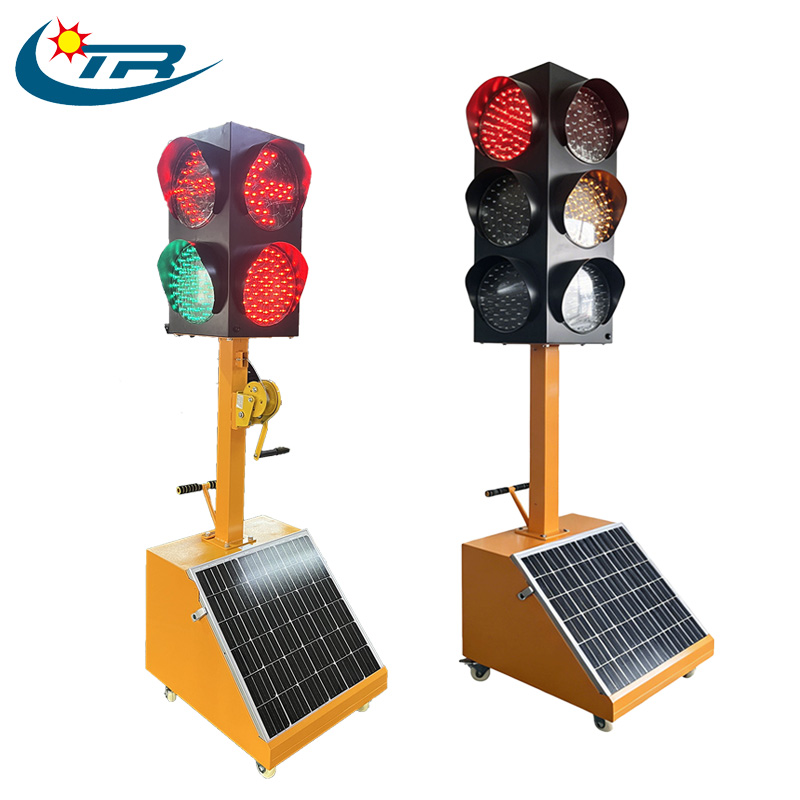
Solar traffic signal lights, a sustainable solution for traffic control, rely on solar energy for operation. Their performance is closely tied to weather conditions, as sunlight availability and intensity directly impact power generation. Let’s explore how these lights function under different weather scenarios.
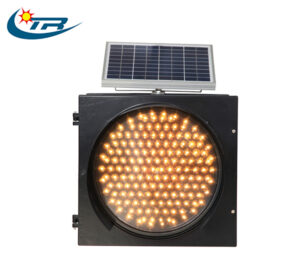
Yellow flashing signal light
I. Normal & Full-Power Operation: Sufficient Sunlight
With strong solar radiation, solar panels generate enough power to run traffic signal lights and fully charge batteries.
- Clear sunny daysStrong solar radiation (typically ≥600 W/m²) enables high efficiency of solar panels. It fully meets real-time power demand of traffic signal lights and charges batteries for subsequent weak-light days.
- Partly cloudy days (thin/high clouds)Thin clouds slightly weaken solar radiation (50%–80% of sunny levels). Solar panels still generate stable power to maintain full-performance operation of traffic signal lights.
II. Partial / Low-Power Operation: Weak Sunlight
Under reduced radiation, solar panels produce less power. Traffic signal lights can still work normally or switch to energy-saving mode if batteries are sufficiently charged.
- Cloudy daysThick clouds lower radiation to 20%–50% of sunny levels. Traffic signal lights maintain standard brightness with sufficient battery power; otherwise, they may dim or run in energy-saving mode.
- Overcast daysHeavy cloud cover reduces radiation to only 10%–20%. Solar panels generate barely any power. Traffic signal lights run on battery power at low brightness for several hours when fully charged.
- Dawn & duskLow sun angle leads to weak radiation. Solar panels capture minimal energy, while traffic signal lights operate normally using stored battery power.
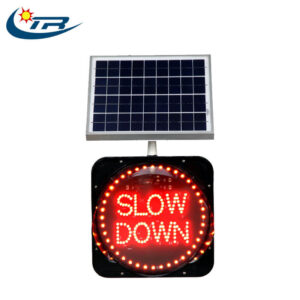
Solar flash warning light (yellow flash with slow down)
III. Dependent on Backup Power: Extremely Low / No Sunlight
Solar panels barely generate electricity. Traffic signal lights fully depend on batteries; without backup power, they may fail after battery depletion.
- Heavy rain, snowstorm or dense fogHeavy rain, snow cover on panels, and thick fog all drastically reduce solar radiation (<10%). Long-duration conditions drain batteries quickly. Models with backup power switch automatically; pure solar traffic signal lights may stop working.
- NighttimeNo solar power generation. Traffic signal lights run entirely on stored battery power. Standard battery capacity supports 8–12 hours of nighttime operation; insufficient capacity may cause dimming or shutdown.
Conclusion
Solar traffic signal lights work reliably on clear and partly cloudy days. They operate partially on cloudy and overcast days with battery support. During heavy rain, snow, fog and nighttime, they rely on batteries or backup power. Continuous severe weather without backup power may cause failure.
For safe road operation, most solar traffic signal lights are equipped with backup power and intelligent monitoring to ensure stable performance of traffic signal lights and avoid traffic risks.
Previous How Do Traffic Lights Adjust to Traffic Flow? Smart Solutions for Modern Cities
How Do Traffic Lights Adjust to Traffic Flow? Smart Solutions for Modern CitiesNext How to Determine Whether Street Traffic Signal Lights Require Replacement?
How to Determine Whether Street Traffic Signal Lights Require Replacement?